Fish Tacos from Kauai
Ali Segersten
Tom and I returned home from Kauai yesterday. We had a wonderful vacation without children this time. They had plenty of fun at home with grandma though! This post is more than a recipe. In fact, after I learned more about mercury levels in Hawaiian fish, I debated posting this at all. But we all make mistakes, and I want to share what I have learned.
When we were packing for our trip I decided to bring a bag of each brown rice, quinoa, pink beans, and raw almonds. I also packed some almond butter, Herbamare, cumin, and our Vitamix. Food is much more expensive over there because everything needs to be shipped in. Relying on all of the local foods and the few things we packed, we were able to prepare amazing, nutritious meals for breakfast, lunch, and dinner while lessening our impact on the environment. There is a farmer's market everyday on the island. You just need to be sure that the farmers you buy from are using organic farming methods, as GMO's are prevalent in non-organic papaya crops, in particular. Most of the meals we ate were vegan, and many were mostly raw or totally raw. One evening we went to the local fish market to purchase fish for tacos. We bought opah, commonly known as moonfish. It is a deepwater fish native to Hawaii. We made a lovely meal that we shared with a friend of fish tacos, quinoa salad, and for dessert a raw macadamia nut-papaya custard. Everything was local except for the corn tortillas, quinoa, cumin, and the coconut oil used for sautéing the fish.
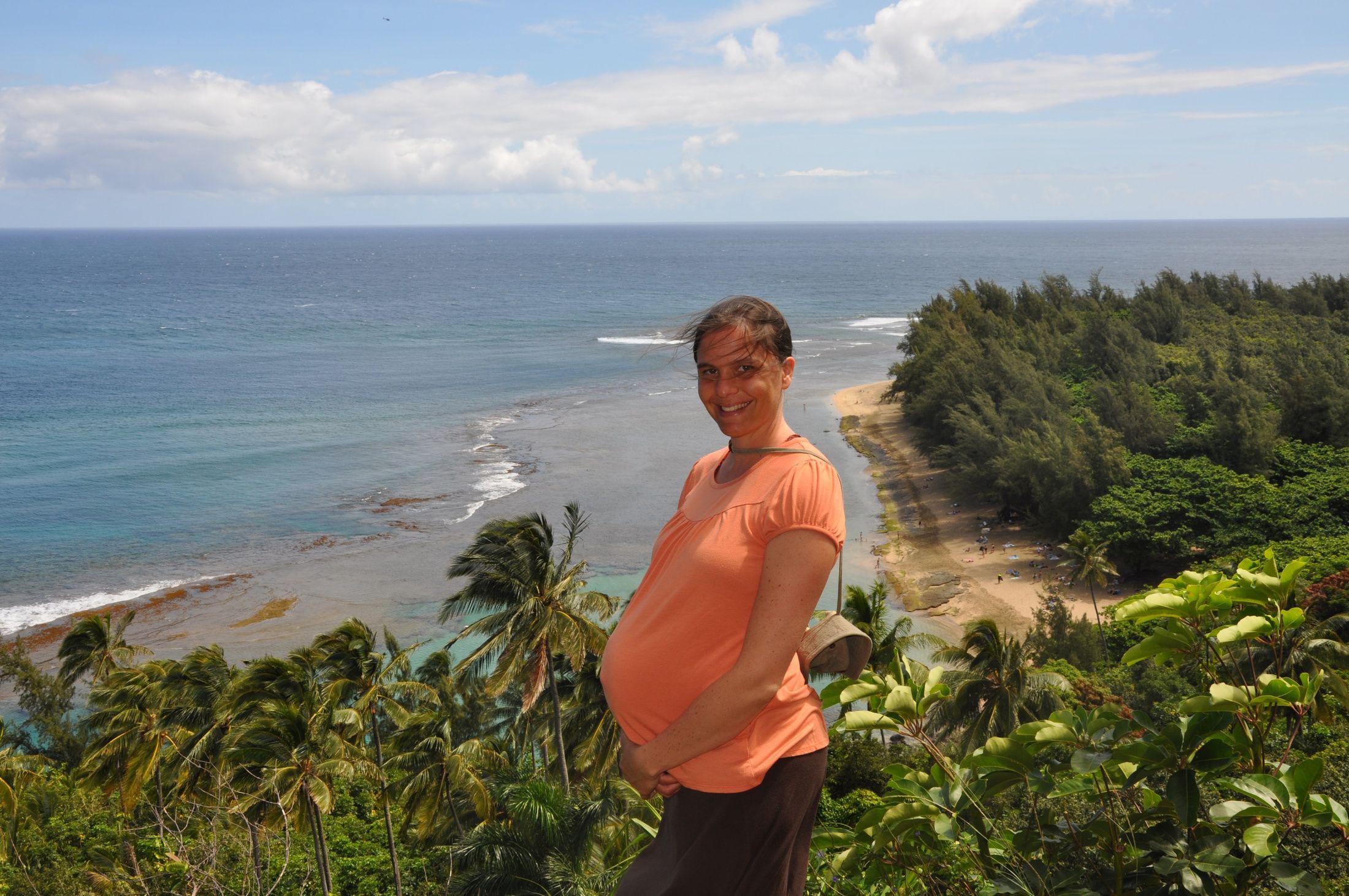
After eating this meal two days in a row, I had the thought to check one of the safe seafood guides for any data on consuming opah while pregnant. Sure enough, it is on the avoid list if pregnant and "consume no more than one serving a month" for adults. Luckily I never consume fish with elevated levels of mercury so I don't feel this will pose a significant problem. Mercury in fish damages brain tissue, especially in developing fetuses, infants, and young children. It also damages heart tissue in adults and male reproductive organs and sperm. Two-thirds of mercury in our environment comes from coal-burning power plants, and a significant amount comes from medical and municipal waste. Microorganisms convert elemental mercury to methylmercury, a toxic form of mercury that our bodies cannot get rid of. It first accumulates in microorganisms at the bottom of the food chain and then moves up the food chain ultimately reaching the highest levels in predatory fish (tuna, shark, king mackerel, swordfish, opah, ono). Interestingly, through my research I also learned that opah, like tuna and other deep water fish, are caught by longline fish practices, a type of fishing that places thousands of hooks on a long line. This practice kills many sea birds and other marine creatures, such as sharks, dolphins, and sea turtles in the process.

Mercury in our food supply is a significant issue. When new scientific findings were released that canned tuna contained very high levels of mercury, the EPA downplayed the findings (the tuna industry is big, think lobbying, and the effect on the economy with a large drop of tuna consumption). You'll still see canned tuna on some of the "safe to eat lists" though in reality, it is not safe at all for pregnant women, children, or women of child-bearing age to consume. In fact, children can receive doses of mercury four times the acceptable level by eating six ounces of tuna per week! More information on mercury in fish can be found on websites such as EWG.org. Mercury has also been found in high-fructose corn syrup and therefore also in commercial foods that contain this ingredient, such as snack bars, barbecue sauce, jelly, yogurt, and chocolate syrup. What are we doing to our environment that we can't rely anymore on local food supplies? We are the cause of many of the problems ailing us today, and we are also the solution. Hopefully this post brings to light some of the issues that can be changed when we focus on human health and the health of our planet.
Hawaiian Fish Tacos

For a list of safe fish to consume check out this downloadable PDF from Food and Water Watch or this Good Seafood Guide from EWG. This recipe for fish tacos can be made with many of the fish on the safe list. When we make fish tacos at home, we use wild Alaskan salmon or Halibut. Pictured here is also a fresh salsa that we made a few nights in a row (to go with our beans and rice). It is made from tomatoes, avocado, papaya, onions, lime juice, garlic, cilantro, and Hawaiian hot chili peppers. Or try serving them with this Papaya Salsa Recipe. We also like to serve fish tacos with thinly sliced napa cabbage and homemade guacamole.
When purchasing your fish, if it still has its skin on, ask the fish monger to remove the skin before it gets packaged up.
Fish
Other Ingredients
- It is much easier to have the fish skinned when you are purchasing it, otherwise you will need a very sharp knife and some skill. If you didn't have the fish monger skin the fish, then do this step now. Then cut the fish into small chunks (I usually cut it into 1 to 2-inch cubes).
- Place the chunks of fish into a shallow baking dish, such as an 8x8-inch pan. Place the remaining ingredients for the fish (lime juice through salt) into a blender and blend for 30 to 60 seconds. Pour marinade over fish. Marinate for about an hour.
- To cook the fish, heat a large heavy-bottomed, stainless steel skillet over medium-high heat. Let the pan heat up for a few minutes, then add about 1 to 2 tablespoons of coconut oil. Add the fish, start with 1/3 to 1/2 the fish if your skillet is smaller (say 10-inches). If you add too much fish at once to a skillet, it is not able to sear and retain its liquid, therefore it loses its moisture into the pan and dries out quickly. You'll notice a bit of water at the bottom of the pan if you add too much fish at once. Sauté for 3 to 4 minutes, depending on the size of the pieces. Remove from the skillet, add a little more oil, and then cook the remaining fish.
- Serve with warmed corn tortillas, salsa, sliced avocado or homemade guacamole, sprouts, and thinly sliced napa cabbage.
Use this recipe in our Meal Planner

Hawaiian Fish Tacos
- Log in to post comments

About the Author
Alissa Segersten, MS, CN
Alissa Segersten, MS, CN, is the founder of Nourishing Meals®, an online meal-planning membership with over 2000 nourishing recipes and tools to support dietary change and better health. As a functional nutritionist, professional recipe developer, and author of The Whole Life Nutrition Cookbook, Nourishing Meals, and co-author of The Elimination Diet, she helps people overcome health challenges through food. A mother of five, Alissa understands the importance of creating nutrient-dense meals for the whole family. Rooted in science and deep nourishment, her work makes healthy eating accessible, empowering thousands to transform their well-being through food.Nourishing Meals Newsletter
Email updates.


